

Mental health talks, done differently.

Most workplace mental health interventions create awareness. They also rarely create lasting impact.
Insight is not enough.
Why?
Because awareness alone doesn't rewire anything. Our brains and nervous systems change through small, repeated, embodied experiences — 2mm shifts that compound over time.
To reliably create these new behaviours, we need more than just information. We need to …
✓ Be open and interested in the kind of change topic at hand
✓ Understand how to personalize it to our individual reality, and
✓ Metabolize the continual emotional and relational discomfort that arises from confronting real change.
Our sessions designed to capture and support exactly this.
The good news? These shifts work like a multiplying force that slowly compound, and eventually, fundamentally rewire how we regard ourselves and approach the world around us.
You don’t need a dedicated coach or therapist to start. Just a little guidance, safety, and a willingness to be honest with yourself.
“Evidence suggests that interventions can have a small positive effect on mental-health … there is, however, only limited evidence of sustained improvements of behavior change (Deady et al., 2024).”

Topics of expertise.
-
The large majority of us consider ourselves self-aware. Self-aware leaders are more effective, have more satisfied employees, and run more profitable companies. However, contemporary psychological research has increasingly demonstrated that only ~10-15% of us actually meet the baseline criteria for self-awareness (Eurich, 2018). A stark and pervasive difference between our belief and our impact. So why the gap?
We struggle to read ourselves. The large majority of us in leadership are incredibly ineffective at reading our internal emotional and physiological signals, while overly relying on, often distorted, personal cognitive narratives.
These imbalances make it difficult for us to regularly and proactively meet our own needs, compounding anxiety, stress, and depression, pushing our capacity through boom-bust cycles. More often, we unconsciously project our feelings and narratives onto staff, pushing our problems downstream and diminishing their capacity in kind.
We struggle to read others. The large majority of us in leadership are also incredibly ineffective, and at times highly resistant, to understanding the impact we have on those around us.
This makes it difficult for us to understand the changing needs and motivations of our people, eroding relational trust, and undermining employee satisfaction and engagement. Rather, staff keep their best most effective selves sheltered beneath the surface, and we receive muted feedback and less than ideal performance.
Learning Outcomes
The good news — self-awareness is a highly attainable skill, rather than an implicit trait:
Build Internal Self-Awareness: Learn how to start effectively reading your physiological stress signals and cognitive distortions before they lead to emotional dysregulation, breaking the executive "boom-bust" cycle.
Build External Self-Awareness: Learn practical feedback mechanisms to evaluate how leadership behaviours impact team performance and how to start using this feedback to develop your understanding of changing team needs and motivations.
Translate Awareness into Relational Infrastructure: Embed practical relational skills and shared norms into your team, promoting relational trust, meaningful engagement, and enabling your teams to bring their full capacity and uninhibited innovation to work.
Target Audience
CHROs and L&D coordinators investing in executive development and focussed on transitioning leadership from traditional management roles to emerging ‘people leaders’.
-
Most men in high-performance environments are running on two parallel tracks: the capable, composed exterior the world sees, and the internal turmoil continually draining them underneath. In Canada, 64% of men report moderate-to-high stress, yet 67% have never sought professional mental health support (Canadian Men's Health Foundation, 2025).
This is because most of us have learned to move through our lives listening to only certain parts of ourselves, while rigorously dismissing, suppressing, and compartmentalizing others. We become adept at meeting the needs of certain parts, demonstrating to ourselves we are safe, capable, and worth something. For many of us men, we build our identities on top of this ground.
At the same time, underneath we often shelter a turmoil of doubt, fears, obligations, shame, and guilt around who we are and who we want to be. Keeping this turmoil underneath the surface is not free. For men, emotional suppression accounts for ~40% of the physiological damage caused by adhering to traditional 'masculine’ norms (Pu & Kong, 2026). It’s a continual drain on our capacity, and the longer it sits beneath the surface, the harder we work to hold it there, the more capacity we spend. It’s neuroscience 101.
So what happens? We box ourselves in, we develop unconscious beliefs about what we’re capable of, and we begin oscillating through burnout boom-bust cycles. And it all has a profound impact — on our relationships, our work, and our capacity to show up as our most unhindered, intentional, and productive selves and fulfill our potential.
Learning Outcomes
Deconstruct the "Performance Mask": Analyze the psychological and physiological costs of common male performance-driven coping mechanisms on men’s capacity and fulfillment.
Map Personal Triggers & Protective Responses: Identify your own unconscious triggers and defense mechanisms that lead to internal turmoil, such as burnout, compartmentalization, and relational isolation.
Rewire Dysfunctional Performance Patterns: Apply practical behavioral practices to increase personal capacity, emotional presence, and sustained performance without sacrificing mental health.
Target AudienceWellness and HR leaders looking to meaningfully engage men in their workforce—a demographic often underserved by traditional mental health programming and disproportionately affected by burnout, isolation, and performance-driven shame.
-
“Despite trillions invested in transformation initiatives over the past two decades, fewer than 15% result in sustainable performance gains (Werner, Le-Brun, 2025).”
If you’re a white-collar worker, you’ve likely led or been pushed through more transformations in the past few years than ever before. This means you’ve also probably been part of that +85%; the majority of us who see these transformations peter out, or crash and burn spectacularly. Why? Well, most commonly: “We just couldn't get our people on board.”
Failed or abandoned transformations carry an undeniable cost: heavy implementation expenses coupled with spikes in voluntary and involuntary turnover. But here’s the plot at the root:
1) Most transformations make promises to their workers they can’t or don’t keep, and are overreliant on survey data to understand what workers actually care about.
“Is this actually going to make my job easier, or just add steps?”
“It looks clean on a slide deck, but it’s a mess on my desk.”
2) Sustainable transformation requires genuine, continual buy-in from both leadership and the workforce, rather than incentivizing with one-off promises or riding out an initial spark of excitement.
“If I engage authentically and point out flaws, will it be used against me?”
“They say ‘efficient,’ but now I just feel boxed into a tighter silo.”
3) Repeat #1 and #2 a couple of times, and it’s human nature for people to become resistant to the next change that comes along. You’ve lost their trust.
“Every time corporate talks about 'efficiency,' it usually ends in layoffs.”
“Why would I trust this? Just nod along. If we keep our heads down, this will quietly vanish like the last three.”
That last point is particularly important — trust capital depletion is cumulative. Every failed initiative makes the next one harder because your teams have learned, rationally, that active adoption carries personal risk and rarely delivers return. It’s self-preservation.
This is why the standard consulting playbook of more communication, tighter change management, and clearer "what's in it for you" messaging is the organizational equivalent of telling a neglected child to trust you because it'll be good for them. It doesn’t address the historical and relational conditions that created those self-preservation defenses in the first place.
There’s an old adage in the software industry: ‘A product that isn’t loved won’t be used, and a product that isn’t used isn’t useful.’
The same applies to your people. An initiative that isn't trusted won't be adopted, and an initiative that isn't adopted doesn't change anything. So whether it’s your new AI rollout, an M&A culture shift, or structural realignment, the equation is the same.
Learning Outcomes
Map Organizational Trust Capital: Quantify the trust your organization has built or depleted, and conceptualize the normative psychological defenses people use to protect themselves during change.
Leverage Applied Psychology Diagnostics (No More Surveys): Learn common diagnostic methodologies from contemporary psychology to identify your workforce's root needs and frictions and repair relational trust across teams.
Build Behavioural Architecture - Introduction to designing the relational and psychological infrastructure required to make continual buy-in possible and long-term change sustainable.
Target Audience
C-Suite, VPs, and their teams dedicated to Transformation, Change Management, and Organizational Development who are navigating new ways of working, AI rollouts, M&As, or structural realignments.

60 - 90 minutes

Practical, interactive + tailored to your team

DURATION
STYLE
AUDIENCE


FORMAT
Virtually + In-Person
IDEAL FOR
Wellness teams, leader retreats, EAPs, associations + mental health initiatives
Topics resonate particularly with high-functioning professionals who seemingly have everything together, but often feel utterly exhausted and alone — forever chasing that feeling of 'good enough'.
And making it all stick.
What happens after even a really great talk?
There’s usually a measurable spike of interest and engagement as we attempt to apply the information. This is good.
At the same time, we also inevitably reenter our usual routines and environments, which often work to inadvertently decondition these new learnings out of us just as quickly. This is common, but less good.
To ensure consistency, comprehension, and the potential for lasting change
Talks are often paired with behavioural advisory programs, grounded in the same contemporary applied psychological science.
Programs combine retrospective behavioural surveys with bottom-up qualitative evidence and clinically observed change gathered across sessions, offsetting traditional top-down approaches to measuring employee behaviour. Reports consolidate anonymized findings with recommendations for continued organizational development.

Talk + Advisory Packages

Tier 1: Awareness
For organizations looking to open the conversation.
✓ Standalone keynote or workshop
Ideal for conferences, awareness campaigns, and introductory programming where the goal is shifting knowledge and attitudes across a broad audience.

Tier 2: Implement
For organizations ready to turn insight into practice.
✓ Week 1: Keynote Introduction
✓ Week 2 - 4: Structured Group Sessions × 3
✓ Report: Group Progress
Facilitated follow-up sessions designed to support content personalization, process emotional resistance, and begin building new behavioural patterns within the team. Anonymized findings consolidated into a brief report.

Tier 3: Partnership
For organizations searching to create lasting cultural impact.
✓ Week 1: Keynote Introduction
✓ Week 2 - 4: Structured Group Sessions × 3
✓ Week 5: Group Report + Leadership Debrief
✓ Week 8, 12, and 24: Group Maintenance × 3
✓ Report: Outcomes & Leadership Recommendations
The full program. Group sessions embed new patterns, leadership debrief aligns structural support at the top, and quarterly maintenance ensures change compounds rather than fades. Data across all sessions consolidated into a confidential report with organizational recommendations.

Graham Hall
M.Ed. (Psych), CCC.
Canadian Certified Counsellor | Behavioural Architecture Consultant | Former VP in Tech

Working at the intersection of applied psychology and neuroscience, people strategy, and systems design. Former clients range from large public enterprises like Microsoft to bootstrapped high-growth companies tackling complex transformation challenges.
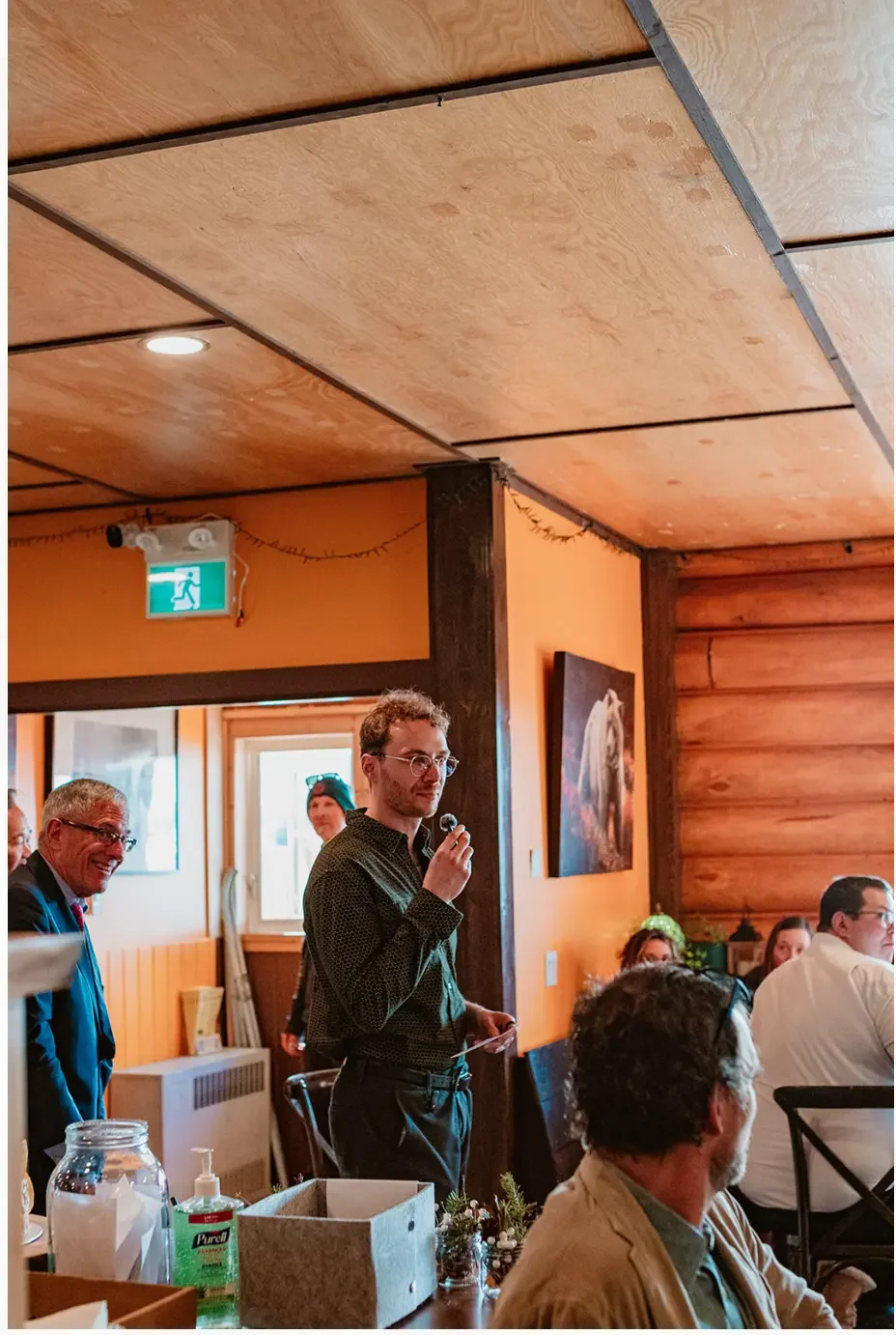
Graham speaks to these topics both as a clinician, and as someone who has lived and led within organizational environments.



“Graham challenged us to think bigger: what if EQ was built into the very systems and routines of our organizations? Instead of treating it as an add-on or workshop blip, he showed how it can become infrastructure that shapes trust, safety, and collaboration at scale.”
— Tristan Claridge, President, International Social Capital Association.

"Graham provided valuable insight that allowed us to make important changes in how we operate as an organization. We are not the same ... the team is SOLID and ready to SCALE."— Stephane Grenier, CEO, Mental Health Innovations.

Interested in bringing this to your org?
Tell us a bit about you, and we can find a time to chat.
We regularly respond within 48 hours.

For organizational consulting & behavioural architecture work, visit:
Rhythm Strategic Consulting